August 26, 2025
When the Skies Became a Supply Chain: What the Berlin Airlift Teaches Us About Business Resilience
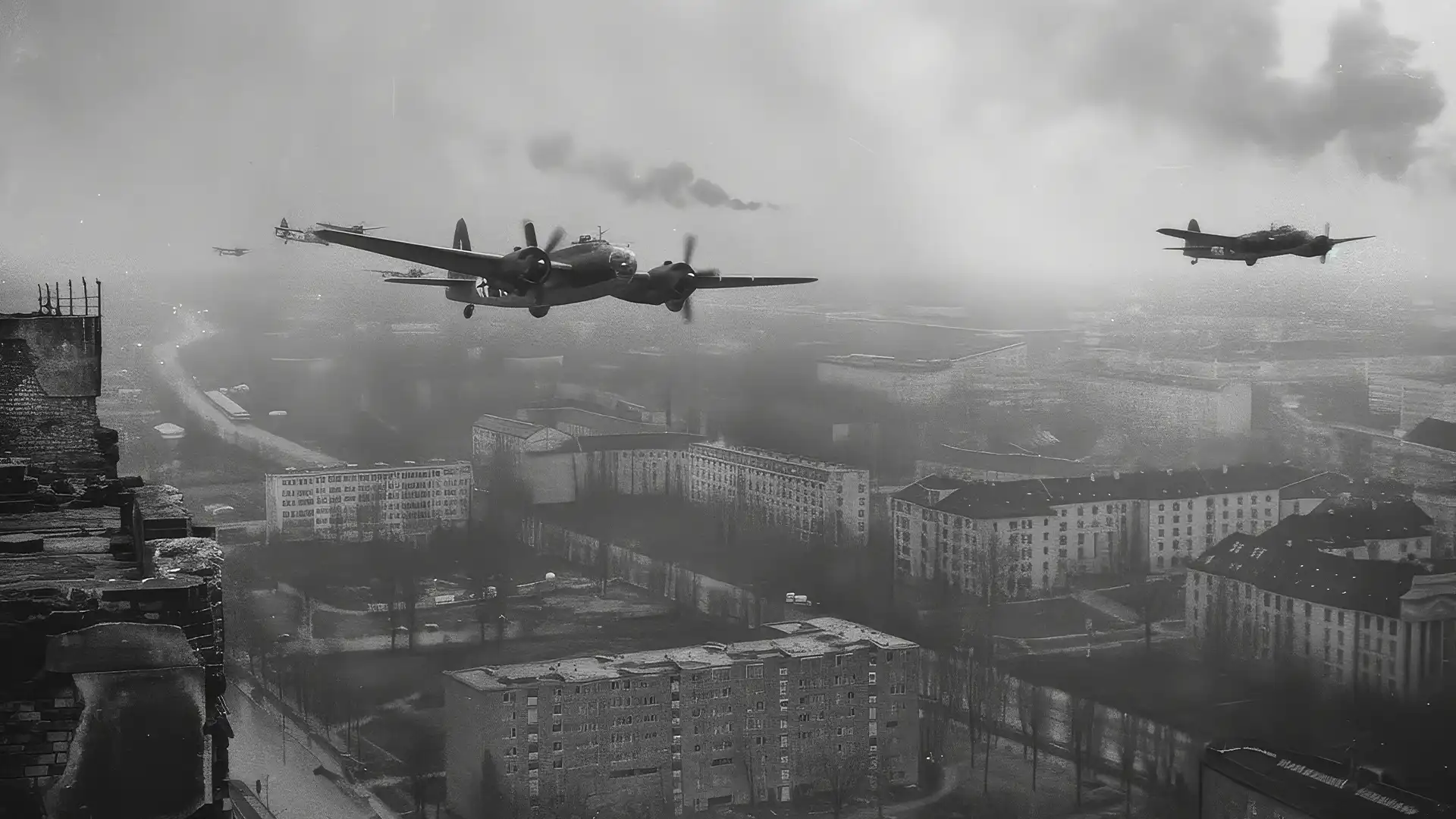
Every 45 seconds, a plane landed in Berlin, maintaining this relentless rhythm for nearly a year. With land routes severed and a city of two million teetering on the brink of starvation, the Allies consistently flew in and out of Tempelhof, Gatow, and later Tegel – an airport constructed in just 90 days specifically for this operation. They delivered essential supplies—food, coal, and medicine—forming what became known as a “logistical air bridge."
It wasn’t just an airlift – it proved that with coordination, creativity, and resilience, even the most insurmountable supply chain crises can be overcome.
Today, businesses encounter their own versions of blockade moments: natural disasters that halt production, geopolitical conflicts that disrupt shipping routes, and pandemics that destabilize global demand. And while the specifics vary, the message stays the same: resilience isn’t just operational – it’s about survival.
West Berliners watch a Douglas C-54 Skymaster land at Tempelhof Airport, 1948

A Crisis in the Sky: The Berlin Airlift Story
When the Soviet Union cut off road, rail, and canal access to West Berlin in 1948, the Western Allies had only one option to keep the city supplied: rely on air transport. At that time, no one believed it was possible to supply an entire metropolis solely through aviation. Coal alone weighed thousands of tons each day, and food shipments had to be continuous to avoid shortages.
Yet, through meticulous planning, the impossible became reality. Flight schedules were carefully mapped – every plane had an exact minute to take off, a designated altitude, and a specific landing slot. Crews rapidly turned loads around, ground staff accelerated the unloading process, and pilots navigated unpredictable weather and crowded skies.
The operation sustained the city with 2.3 million tons of supplies through 277,000 flights in just under a year. Beyond its immediate success, the Berlin Airlift established a benchmark for what logistics can achieve under pressure.
Beyond tonnage and timetables, the Airlift emerged as a symbol of human resilience. Pilots like Gail Halvorsen, known as the ‘Candy Bomber,’ dropped small parachutes of chocolate to children below. This simple act of kindness transformed logistics into a beacon of hope, demonstrating that supply chains are not merely about moving goods but about sustaining lives.
This wartime logistics miracle offers a blueprint that extends far beyond 1948.
German children cheering a U.S. cargo plane arriving with food, fuel, and other supplies. West Berlin, 1948

The Modern Parallel: Resilience in an Uncertain World
Fast forward to today: global supply chains are longer, leaner, and more vulnerable. A pandemic can shut down factories overnight. When the Ever Given blocked the Suez Canal in 2021, it trapped an estimated $9.6 billion worth of trade each day. A port strike ripples through rail networks for months. For businesses of all sizes, the shock can be devastating.
The Berlin Airlift teaches us that resilience doesn’t come from luck; it comes from planning, coordination, and adaptability. Just as every Allied flight had a contingency plan, businesses today need a flexible logistics framework that allows them to reroute, shift modes, and maintain operations even when disruptions occur.
Key parallels:
- Blockades become bottlenecks. Whether it’s a closed border or a congested port, the principle is the same: access is restricted, but goods must move.
- Tonnage pressure becomes demand volatility. The Allies calculated tonnage down to the last sack of flour. Today’s businesses must anticipate sudden demand changes and have backup sourcing and transportation options ready.
- Flight coordination then becomes digital tracking today. The precision that kept planes on schedule was the precursor to real-time visibility. Without it, resilience collapses.
A C-74 Globemaster plane at Gatow airfield on August 19, 1948, with more than 20 tons of flour from the United States

Your Business’s Strategic Air Bridge
At The Block Logistics, we’ve seen how quickly supply chain disruptions can escalate from small issues to major crises that threaten your business. We view logistics as a form of risk management, not just transportation. Our goal isn’t merely to move your freight – it’s to make sure your supply chain functions smoothly, especially when traditional routes aren’t an option.
We help you build your logistical air bridge through:
- Multi-Modal Contingency Planning: Like those Allied planners coordinating planes, trucks, and ships, we create transportation strategies that seamlessly switch between modes when disruptions happen. Your shipments keep moving even if your primary routes are blocked.
- Dedicated Operations Expertise: When a sudden port closure recently threatened to shut down a client’s production line, our operations team had their shipments rerouted from rail to dedicated trucks within days – no delays, no disruptions. This kind of rapid response is possible because every client works with an operations professional who truly understands their business: critical deadlines, seasonal fluctuations, and supply chain priorities. When crisis strikes, you have someone invested in your success, not just your shipment.
- Transparent, Real-Time Communication: Those airlift controllers succeeded because they could quickly access the information they needed, such as where each plane was, what it carried, and when delays happened. Our visibility tools give you that same ability to get answers quickly, transforming your supply chain from a series of questions into clear, actionable insights.
Building Your Bridge Before You Need It
The Berlin Airlift succeeded because the infrastructure and relationships were established before the crisis reached its peak. The most resilient businesses follow the same strategy, forming flexible logistics partnerships and contingency plans ahead of disruptions.
Just as planes once filled the Berlin skies to safeguard a city’s survival, today’s businesses can craft their own bridge of resilience to maintain continuity and lay the foundation for growth, confidence, and long-term stability.
Ready to establish your business’s strategic air bridge? Connect with us to strengthen your supply chain – because when traditional routes fail, your business still needs to fly.
Welcome to Logistics Unusual.